
Termites Can Be a Big Problem
[separator top=”-55″ bottom=”10″ style=””]
Termites are always a concern for homeowners, but often they don’t do anything practical about those concerns for a long time, or until they find termite damage in their homes: by which time an initial small problem has become a major one.
When Best 1 goes out to do an inspection for termites, we often find the main problem is that the homeowner has left it far too long to have their homes inspected.
Treatment for Termites
Once we have treated any termites inside the home the next things to organise are a barrier treatment and an annual inspection/monitoring program. The inspection program is an important part of monitoring the success of a barrier treatment.
Barrier Treatments
Barrier treatments can be costly. But they are also cost effective and save you money over the long term. This is because termites can destroy a house in no time at all, and most people don’t even know they have a problem until they see termites falling through a wall.
In Queensland, we have ideal climate conditions for termites, and this is why there is such a problem with them in our homes.
Commercial Pest Control Treatment for Termites
Because of all the new building work that is going on today throughout Brisbane and the Gold and Sunshine Coast, termites are more active.
Every time we bulldoze a piece of land, we destroy the termites’ natural habitat; then we build houses on top of them. This can only lead to one thing over time, and that’s termite in your home.
A pre-slab treatment is done on each home before building work can commence. But these treatments don’t last forever, and it is why a monitoring program should be set up with a local termite specialist.
Make sure you contact a reputable company for all your termite work, so that you are assured of a good job.
A few years ago, a company was doing all the termite treatments for a local land development company. The company was not using the correct amount of the pesticide in the treatment, which led to a lot of problems down the track for new homeowners.
So, always use an experienced and trusted company, such as Best 1, when dealing with termites.
The best thing you can do is to have your annual inspection when you have your regular pest treatment. That way you can save money and time.
Remember – Termites may be small, but they can do untold damage in a short time.
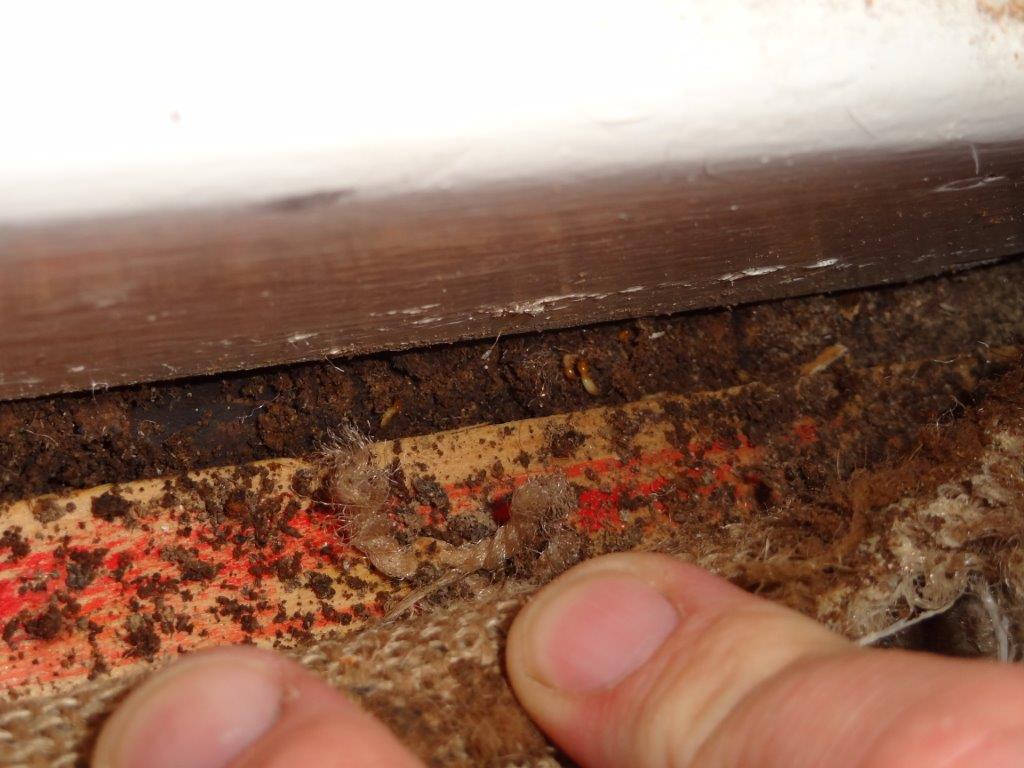
Underneath the carpet termites are found.